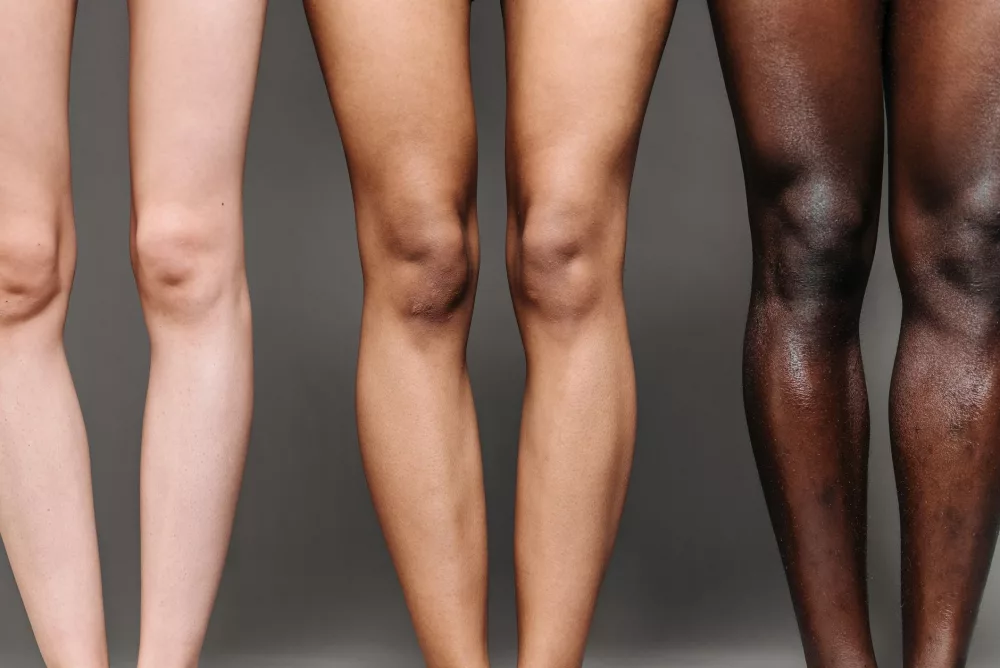
When I really stop to think about it, the phrase 'skin color names' is deceptively simple, isn't it? It conjures images of neatly categorized shades, perhaps like paint swatches, but the reality is far more intricate, more fluid, and honestly, a lot more human than any chart could ever capture. For generations, we’ve used a lexicon to describe human skin tones, a vocabulary that has shifted, expanded, and often, unfortunately, been weaponized. As someone who’s spent a good deal of time observing how language shapes our perceptions, I’ve found the evolution and application of these names absolutely fascinating, if not sometimes troubling.
The Shifting Sands of Classification
Historically, humanity has always attempted to classify itself. It's a natural inclination, I suppose, to try and make sense of the world around us, and that includes our fellow humans. Early efforts at categorizing skin color were, by today's standards, remarkably crude and often deeply biased. Think about the 18th and 19th centuries; naturalists like Linnaeus and Blumenbach tried to slot people into distinct racial groups, frequently assigning specific temperaments or characteristics based solely on perceived skin hue. Their terms, things like 'European white,' 'American red,' 'Asiatic yellow,' and 'African black,' reflect a deeply flawed understanding of human diversity, a system built more on observation through a prejudiced lens than on actual scientific rigor. What strikes me is how these terms, despite their scientific veneer, were fundamentally social constructs designed to justify hierarchies.
“The human species is one, and no amount of pseudo-scientific categorization can alter that biological truth.”
It’s important to remember that skin color exists on a continuous spectrum. There aren't sharp, definitive lines where one 'color' ends and another begins. Yet, our language often forces us to create those arbitrary boundaries. This isn't just an academic point; it has profound implications for how we view ourselves and others.
The Biology Behind the Hue
Before we dissect the names themselves, it’s worth a quick moment to consider the biology. Our skin color is primarily determined by melanin, a pigment produced by specialized cells called melanocytes. Eumelanin, which is responsible for brown and black hues, and pheomelanin, which gives us red and yellow tones, work in varying concentrations. Genetic factors play the biggest role here, dictating how much and what type of melanin our bodies produce. Environmental factors, especially exposure to ultraviolet (UV) radiation from the sun, also influence melanin production, causing tanning or lightening. It's a complex dance of genetics and environment, resulting in the breathtaking array of skin tones we see across the globe.
Navigating Modern Terminology: From Cosmetic Aisles to Cultural Conversations
In our contemporary world, 'skin color names' manifest in a few different spheres. One of the most visible is, without a doubt, the cosmetics industry. Walking through a makeup store, you'll encounter an absolute riot of descriptive terms: 'porcelain,' 'ivory,' 'beige,' 'honey,' 'caramel,' 'mocha,' 'espresso,' and often, more evocative names like 'toasted almond' or 'warm sand.' While these names aim to help consumers find their perfect match, they’re still rooted in a commercial, sometimes superficial, categorization. I’ve noticed how brands try to expand their shade ranges, which is a positive step, but the challenge remains in creating terms that are both descriptive and inclusive without being reductive.
Beyond marketing, we use informal terms in everyday conversation. You hear things like: 'fair-skinned,' 'olive-toned,' 'tanned,' 'dark-complexioned.' These are generally understood, yet they carry their own ambiguities. What exactly constitutes 'olive'? It’s a term often applied to people of Mediterranean, Middle Eastern, or Latin American descent, suggesting a greenish-yellow undertone, but it certainly isn't a single, monolithic shade. I’ve met countless individuals who would fit that broad description, yet their skin tones differ dramatically.
The Cultural Load of Color
This is where things get particularly interesting, and frankly, quite sensitive. The names we assign to skin colors are never just descriptive; they are laden with cultural meanings, historical baggage, and social implications. In many societies, lightness of skin has historically been associated with privilege, beauty, and higher status – a phenomenon known as colorism. This is a form of discrimination where individuals with lighter skin tones within the same ethnic group are favored over those with darker skin tones. It’s a pervasive issue that speaks volumes about the internalized hierarchies shaped by colonialism and racism.
For example, in some Asian cultures, the pursuit of 'fairness' is a dominant beauty ideal, leading to the widespread use of skin-lightening products. Conversely, in certain Western contexts, a 'tan' might be seen as desirable, symbolizing leisure and health. It just goes to show you that even seemingly innocuous descriptors are not universal in their interpretation or value. They shift, morph, and acquire new meanings depending on the cultural backdrop.
- 'White' and 'Black': These are perhaps the most charged terms. They are broad social constructs, not scientific classifications, representing vast, diverse groups of people. I think it’s crucial to understand that these aren't literal color descriptions but socio-political categories that have been used to define race, often with oppressive consequences.
- 'Brown': A term that’s gained more traction in recent years to describe people of South Asian, Middle Eastern, and Latin American descent. It attempts to be more inclusive than 'yellow' or other outdated terms, but it still struggles with the immense diversity it aims to encompass.
- Indigenous Descriptors: Many Indigenous communities have their own nuanced ways of describing skin tones that are often tied to their land, ancestry, and specific cultural identity, far removed from the generalized 'red' of colonial eras.
Towards a More Nuanced Language
It’s become increasingly clear to me that relying on a handful of generic 'skin color names' is wholly inadequate for describing the incredible diversity of human complexions. It's like trying to describe an entire symphony with just three notes; you just can't capture the richness. What we need, perhaps, isn't more fixed categories, but a greater appreciation for the continuum, for the unique shade and undertone of each individual.
I believe a healthier approach involves moving away from rigid, color-based racial classifications and towards a recognition of ethnicity, ancestry, and self-identification. When we talk about skin, maybe we should focus less on assigning a definitive 'name' and more on understanding the spectrum, the variations, and the complex interplay of genetics and environment that creates such beautiful diversity. It's about respecting individuality, celebrating the unique palette each person carries, and dismantling the historical prejudices tied to these simplistic labels. Ultimately, while we need language to communicate, I think we also need to be acutely aware of its limitations and its power, especially when it comes to something as fundamental as describing who we are.