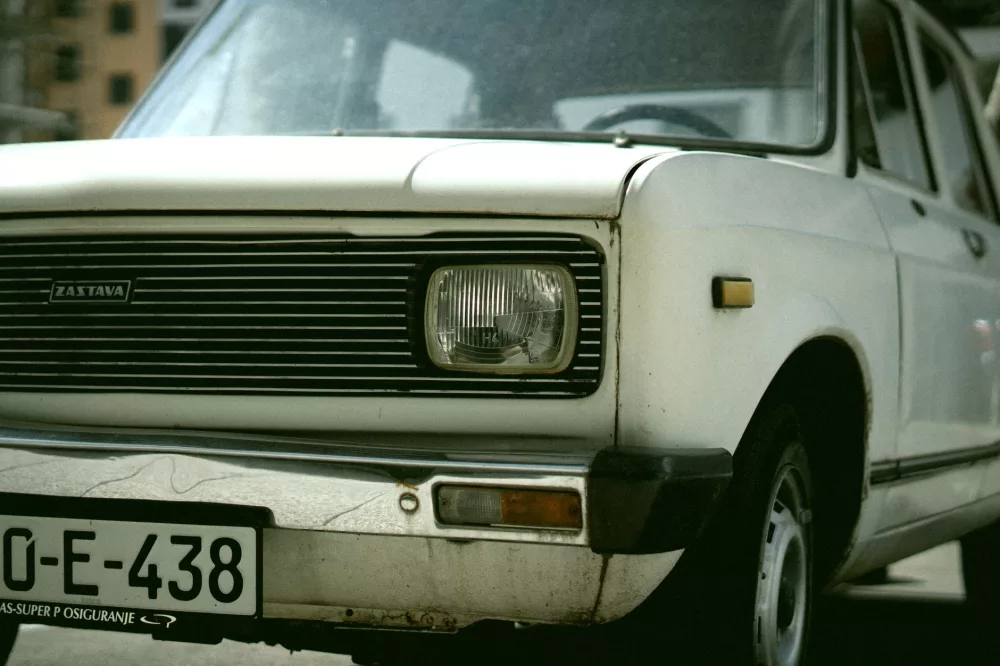
You Can't Talk About Cheap Cars Without Mentioning the Yugo
When you hear the name "Yugo," what's the first thing that springs to mind? For most of us, it's probably a joke, isn't it? The little car that became synonymous with unreliability and a punchline for late-night comedians. I get it; the reputation precedes it. But you know what? I think there's a much richer, more nuanced story behind the Yugo than just its infamous status as the "worst car ever." It’s a fascinating tale of ambition, economics, and a dramatic clash of cultures and expectations.
Where Did This Tiny Car Even Come From?
To truly understand the Yugo, we need to hop into a time machine and set our destination for 1980s Yugoslavia. The car wasn't just some random invention; it had deep roots. It was built by Zastava Automobili, a Serbian manufacturer that had been assembling Fiat models under license for decades. Think of cars like the Zastava 750, based on the Fiat 600, or the Zastava 101, derived from the Fiat 128. These were bread-and-butter vehicles for the Yugoslavian market – simple, affordable, and practical for everyday folks.
The idea behind what would become the Yugo was straightforward: create a small, economical car for the masses, a true 'people's car' for their market and potentially for export to Western nations. The Zastava Koral, or as we know it, the Yugo, essentially took the chassis and powertrain from the Fiat 127, updated its styling a bit, and was built with an emphasis on cost-effectiveness. It was designed to be basic transport, nothing fancy, just a way to get from A to B.
The American Dream (and Nightmare) of Malcolm Bricklin
This is where our story gets really spicy, at least for us here in the United States. An American entrepreneur named Malcolm Bricklin saw an opportunity. Now, Bricklin wasn't a newcomer to importing; he’d successfully brought Subaru to the US and even tried his hand at a gull-winged sports car. His vision for the Yugo? A brand-new car for less than $4,000. In the mid-1980s, that was an absolutely unheard-of price point. People were hungry for affordable wheels, and Bricklin believed the Yugo could fill that void.
Getting the Yugo ready for the American market was no small feat. It wasn't just a matter of shipping them over. Zastava had to modify the cars significantly to meet stringent US emissions and safety standards. I can only imagine the headaches involved in retrofitting catalytic converters, beefing up crash structures, and adding things like side-marker lights. But they did it. They really did it. In 1985, the Yugo GV (which apparently stood for 'Good Value' or 'Great Value' – a little ironic, perhaps?) officially hit American showrooms.
Initial Buzz and the Inevitable Letdown
Believe it or not, initial sales were actually pretty good! People were genuinely excited. Imagine being able to buy a brand-new car, with a warranty, for what felt like pocket change compared to other vehicles on the market. The marketing pushed its affordability hard. The tagline, "Everyday, I drive a Yugo," tried to normalize it as a sensible, no-frills choice. For a brief shining moment, it looked like Bricklin had pulled off another coup.
But then, the cracks began to show. Oh boy, did they show. I’ve heard countless stories over the years, and many of them sound like they came straight out of a comedy sketch. Think about it: a car built to minimum specs in a different economic system, rushed to meet demanding American standards. The build quality was… inconsistent, let’s say. Tales of wipers falling off, electrical gremlins, and sometimes even more serious mechanical issues became common. Owners found parts hard to come by, and many mechanics weren't familiar with its quirks.
- Some folks reported the engine giving up the ghost way too early.
- Others dealt with bizarre electrical problems that were a nightmare to diagnose.
- Body panels sometimes didn't quite line up perfectly, giving it a somewhat charming, if haphazard, appearance.
- One famous incident involved a Yugo being blown off a bridge by high winds in Michigan, though the exact circumstances are still debated. Still, it fueled the jokes.
The Yugo Becomes a Cultural Punching Bag
This is where the Yugo cemented its place in pop culture. Late-night talk show hosts and stand-up comedians absolutely loved it. It became the go-to example of a terrible product. "How do you double the value of a Yugo? Fill it with gas!" "What's included in every Yugo owner's manual? A bus schedule!" You get the idea. This relentless barrage of jokes, fair or not, made it incredibly difficult for the car to ever be taken seriously. It became a symbol of cheap, unreliable transportation, a car you bought only if you absolutely had no other option.
Was It *Really* the Worst Car Ever Made?
Now, I’ve got to ask you, was it truly the absolute worst car in automotive history? I don't know, I kinda think that label might be a bit harsh. Look, it certainly wasn't a BMW or a Mercedes. It wasn’t designed to be. It was basic, bare-bones transportation, and for some people, it actually served its purpose. I’ve spoken to a few enthusiasts who swear their Yugo ran for years with minimal fuss, provided they kept up with simple maintenance. It was a straightforward car, largely free of complex electronics, making it relatively easy for a shade-tree mechanic to work on.
The context really matters here. It was an ultra-economy car from a communist-era nation, introduced into a market accustomed to far more robust (and expensive) vehicles. The quality control issues were real, yes, but the massive cultural perception problem was just as damaging, if not more so. Once the jokes started, there was no stopping them.
The Decline, the Fall, and the Legacy
Unsurprisingly, sales plummeted. The jokes stuck, and the reputation became impossible to shake. Things got even tougher when the political landscape in Yugoslavia began to destabilize, eventually leading to the violent breakup of the country. This made importing cars and securing parts an absolute nightmare. By 1992, Yugo America filed for bankruptcy, and the American dream for the little Yugoslavian car was officially over.
Production of the Zastava Koral continued in Serbia for many more years, even getting some minor updates, before finally ceasing around 2008. So, what’s the Yugo’s legacy today? Well, I think it's a stark reminder of what happens when a product prioritizes cost above almost everything else, especially when crossing international borders with different standards and expectations. It taught the automotive industry a hard lesson about perception, quality control, and the immense power of public opinion.
But you know, for all the jokes and criticism, the Yugo still holds a weird kind of charm. You see one at a car show, and people flock to it. It’s a piece of history, a conversation starter, and for some, it’s even become a quirky cult classic. It’s a car that dared to be different, that tried to be everything to everyone on a shoestring budget. And even if it largely failed, I can’t help but find that just a little bit endearing.